What to Look for When Selecting a Charcoal Barbecue
What to look for when acquiring a charcoal bbq
Created by BBQbarbecues.co.uk
For most people, the idea of a barbecue entails a white hot, charcoal fuelled animal, pumping out plumes of smoke to supply that delicious flavor we all know and love. Whilst a lot more easy to choose than a gas barbecue, you may still find a number of options – some more fascinating ones which you may have never actually considered in fact – which have to be weighed up to unite master with the correct barbeque grill.
Size and convenience
Unlike gas where you have to also consider coordinating overall size along with the amount of burners, with charcoal the bigger the area, the more charcoal you toss in. For any portable bbq which you plan to take to the beach or even recreation area, you needn’t be worried about anything but price. However, if you are planning on entertaining more guests, then you’ll start needing bigger grilling areas and quality. Additionally, don’t forget that the good thing about charcoal means you could use your larger barbecue to do small cook-outs; just add less charcoal and keep everything firmly packed in the middle instead.
Build and temperature management
In the event that portability isn’t an issue, do not attempt to cut costs with a inexpensive build. The last thing you want is it blowing over, or even the handles of the grill falling off and dropping your meat or burning yourself. If you opt for classy models you can have the look of the slinky gas bbqs but put charcoal in instead. Don’t bother - the best part about charcoal bbqs is simplicity. In the end, charcoal barbecuing is basically a process of chucking a sizable bag of coals into a metal pot and hovering a grill over it. Go for a strong, sturdy barbeque grill with great handles which rests securely in position on the bbq. Numerous grills arrive in the form of chrome-plated steel, but even better ones will be solid stainless steel or even enamel-coated. Enamel covered surfaces are much more common on charcoal bbqs than with gas, which permit simple cleansing, heat retention as well as weather protection, however are prone to chipping. Complete the package with welded or strong-bolted legs to keep it securely in position.
So what kind to choose? The main way to manage the heat within charcoal cooking would be to raise or even lower the height of the grill, so think about getting a variety of levels, in addition to additional grills to keep different heights all the time (allowing you to cook a lot more delicate foods simultaneously). Heat can also be controlled with lids and air vents, so if you fancy roasting in addition to grilling go for an enclosed design such as a kettle drum. A temperature monitor can be bought individually if you don’t acquire one with your enclosed system. Little details also help upon more commercial models such as one touch coal waste removal slots and hinged grills you can fit it in the dishwasher.
Simple models: Braziers
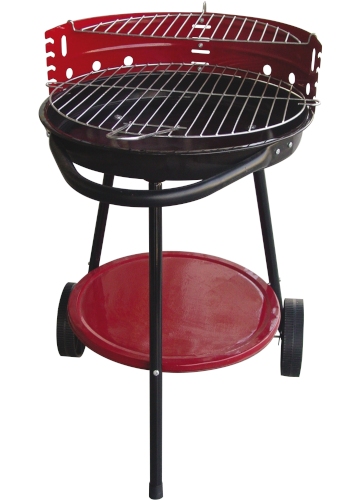
A good starting point for periodic barbecuing needs is a mid-size Brazier model. One of the most familiar to all of us, Brazier simply means a charcoal tray without any vents or even lid, where temperatures are managed solely by the height of the barbeque grill. They are available as hemispherical pans, drums or as long rectangular trays such as “trolley” versions, complete with wheels and often table areas at the side to put numerous bits and pieces. They range in dimensions from medium to large and are affordable, however do not anticipate them to last forever or be made of the greatest stuff.
Cost: <£50
Kettle bbqs
The lidded, vented and much more flexible abilities of the kettle style are a recommended purchase, and still do not carry a hefty cost tag. You should anticipate build quality to be better, so if bought in a shop test the lid – this should be heavy and well hinged. Look for coated or even stainless steel vents which will resist rust, and consider the grill, as often the handles are so small you will have trouble picking up the barbeque grill with oven gloves on. The beauty of kettle versions is in the versatility; open the lid and grill as normal, but close it and you suddenly gain the ability to roast. In addition, with the cover closed you are able to allow that beautiful smoky flavor to permeate much more into the actual food, and flare ups from the drippings are no longer a problem in the enclosed environment. Posh models have heat probes, however to be honest you can stick a simple chef’s thermometer in there and save yourself some dosh. Charcoal dividers are a nice touch, allowing you to place the coals on 1 side and cook the meat in the far end to roast more gently with the lid on.
Cost: £50
Something different: Slow cookers
If you are used to flash burning (ahem, “cooking”) your own typical range of sausages as well as burgers then you might have never thought of slow cooking. The best part associated with charcoal cooking is that flavoursome smoke, so why give your meats such little time in to soak it up? Slow cooking food versions are more gentle version of the kettle design, using controllable air vents to determine how warm the actual charcoal becomes. Crucially, the slow cooked, smoky tenderness is actually achieved with a water pan in the bottom - keeping meats, vegetables and fish moist. Big enough to cook a whole roast in, you’ll certainly be wowing your guests with something a little different.
Price: ~ £200
